

Behind the Bearish Bets: What Rising Short Interest Reveals

If you have been watching the markets lately, you have probably noticed the same thing I have: a lot of noise, a lot of headlines, and a lot of short-term anxiety. Between geopolitical tension, energy price concerns, inflation fears, and endless debate over what the Federal Reserve may or may not do next, markets have had plenty to react to. That kind of backdrop can make even disciplined investors feel unsettled. My view is straightforward: I believe this disruption is temporary That does not mean the current environment should be ignored. It should not. But it does mean I do not believe this is a signal that the long-term investment landscape is permanently broken. More likely, this is another example of markets digesting a short-term shock, repricing risk, and then gradually moving forward once uncertainty begins to settle.
The attached KKR Flash Macro Update does a good job of explaining what is driving the recent volatility. Their team describes the current backdrop as a “muddle through” environment, where markets are trying to absorb several major forces all at once: geopolitics, inflation uncertainty, energy market disruption, private credit repricing, and questions around growth and employment.
One of the main points in the report is that oil has become the fastest transmission channel from geopolitics into the broader economy. KKR lowered its U.S. GDP outlook, raised its headline inflation forecast, and expects the Fed to remain patient rather than aggressively hike into the shock. In plain English, that means slower growth and more volatility in the near term, but not necessarily a full-blown breakdown.
That distinction matters.In my opinion, investors should be careful not to mistake temporary stress for permanent damage. Markets are forward-looking. They usually react hardest when uncertainty is highest, and then begin to stabilize once there is better visibility. We have seen this pattern before. The discomfort is real, but so is the market’s ability to adapt. Even KKR notes that while oil prices may stay elevated for a period, this cycle is still different from the structural shocks of the 1970s because global demand growth is slower and supply dynamics are more flexible than they were in prior decades. That is one reason I do not believe this becomes an endless spiral.
Another important takeaway from the report is that KKR does not expect a major second-round inflation surge across the whole economy. Their view is that most of the inflation pressure remains primarily energy-driven, with only limited pass-through into core inflation. That should matter to investors, because markets can typically work through delayed rate cuts and modestly slower growth much more effectively than they can work through a truly unanchored inflation regime.
My View: Stay Disciplined, Not Reactive
When volatility rises, the instinct to “do something” can become very strong. But the best decisions are rarely made in emotional moments.This is a time to stay disciplined, review allocations carefully, make sure your plan still fits your goals, and look for opportunities that periods of dislocation can create.
It is also a reminder that diversification matters — and that diversification today may need to go beyond the traditional public stock and bond conversation. KKR’s report points out that in more inflation-sensitive environments, stocks and bonds can struggle at the same time, which can make classic 60/40 portfolio construction less reliable than many investors expect. That is one reason we continue to evaluate a broader opportunity set for qualified clients, including private investments through strategic relationships with firms such as KKR, along with a number of other leading private market managers. Private investments are not suitable for everyone, and they come with important risks, complexity, and liquidity considerations. But when used appropriately, they can add a different source of return potential, income, and diversification to a well-designed portfolio
If You Do Not Read the Attached Guide, Here Are the Big Takeaways
Here are a few simple highlights from the KKR piece:
- KKR sees the current environment as a “muddle through” scenario, not an immediate collapse case.
- The biggest near-term transmission mechanism is energy, especially oil, because it can affect inflation, growth, and central bank policy quickly.
- KKR reduced its U.S. GDP forecast to 2.0% in 2026 and 1.6% in 2027 as higher energy prices act like a tax on consumers and businesses.
- They increased their U.S. headline CPI forecast to 3.8% for 2026, but still expect only modest spillover into core inflation.
- They do not believe the Fed is likely to launch into aggressive hikes because of this shock; instead, they expect a more patient path.
- They also believe traditional diversification may be less effective when inflation risk keeps stocks and bonds moving in the same direction.
- Their broader conclusion is that private markets may become increasingly important in portfolio construction as investors look for diversification, return potential, and inflation resilience.
Additional Resources Worth Reviewing
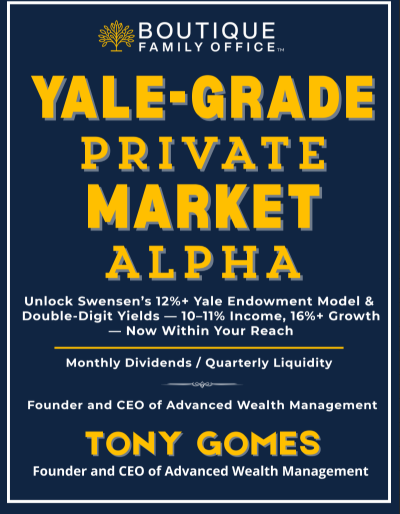

The Private Market Access Guide is helpful for investors who want to better understand how private real estate, private credit, private equity, and other non-traditional strategies may fit into a broader long-term wealth plan.
The Hidden Tax Guide is especially timely right now. Tax season tends to remind people that what matters is not just what you make, but what you keep. Thoughtful tax planning remains one of the most overlooked drivers of long-term financial outcomes, particularly in retirement and distribution planning.
Final Thought
My bottom line is simple: I believe this market stress is temporary.
Could volatility continue for a while? Absolutely. Could headlines stay messy? Very likely. But long-term investors are usually rewarded not for reacting to every wave of uncertainty, but for staying grounded, diversified, and aligned with a well-built plan.
If you would like to review your current allocation, stress-test your retirement income strategy, revisit your tax planning opportunities, or better understand how private investments may or may not fit into your broader plan, let’s have that conversation.
Periods like this are exactly when thoughtful planning matters most.
Read the Full KKR Flash Macro Update
Disclosure: This commentary is for educational purposes only and should not be construed as personalized investment, legal, or tax advice. All investments involve risk, including loss of principal. Private investments are not suitable for all investors and may involve illiquidity, higher risk, and additional complexity.
Let’s build a stronger, smarter plan together.
Schedule your free consultation today
At AWM, Our Fiduciary Duty Principles™ Define Our Commitment
This commentary is for informational and educational purposes only and is not investment, tax, legal, or accounting advice. Any investment involves risk, including the possible loss of principal. Private and alternative investments may be illiquid, may involve higher fees, may use leverage, may have limited transparency, and may not be suitable for all investors. Liquidity features (including redemption/repurchase programs) are not guaranteed and may be limited, suspended, or modified. Distributions are not guaranteed and may be sourced from factors other than operating cash flow. Tax treatment is complex and investor-specific; consult your tax advisor. Any offering is made only through applicable offering documents and only to eligible investors where lawful.
How We Can Help You
At AWM, we provide personalized, comprehensive guidance for individuals and families. Our services offer peace of mind and confidence through every stage of your financial journey:
- Investment Management: Our globally diversified, tax-efficient portfolios are designed for resilience across market conditions.
- Proactive Tax Planning: We focus on tax-efficient strategies for both accumulation and distribution phases, helping you manage liabilities.
- Integrated Goals-Based Planning: Align all life goals into a unified financial plan to navigate transitions strategically.
Contact AWM today to schedule a confidential consultation and connect with an advisor who can help you achieve your financial goals. For assistance, reach out to us at Service@awmfl.com.
Thank you for your continued trust and engagement.
Tony Gomes, Author, MBA
CEO and Founder
Advanced Wealth Management