

Mastering Portfolio Diversification in Changing Economic Climates
In investing, change is the only constant. One year it’s a roaring bull market, the next we’re navigating a bear slide or coping with inflation. With markets always evolving, smart investors know they can’t afford to set their strategy on autopilot.
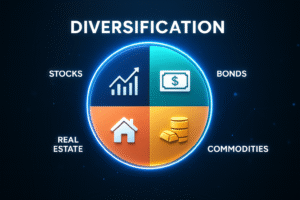
Diversification—spreading investments across different asset classes, sectors, and geographies—is one of the most effective tools for managing risk. But here’s the real key: your diversification strategy should adapt to the market environment you’re in.
This article breaks down how to diversify effectively in bull, bear, and inflationary markets, while also explaining the importance of regular rebalancing, managing portfolio drift, and considering asset classes like bonds, private investments, and inflation hedges.
Diversification in a Bull Market
Bull markets are defined by investor optimism, rising prices, and strong economic indicators. While growth feels good, they can also mask hidden risks.
- Rebalance to Prevent Portfolio Drift:In a rising market, equities often outperform other asset classes, which can lead to portfolio drift—when your asset allocation gradually shifts away from your original targets. For example, your 60% stocks/40% bonds allocation could become 75% stocks/25% bonds if equities have a strong run. This unintentionally increases your exposure to volatility.Rebalancing helps bring your allocation back in line with your risk tolerance and long-term goals. It’s like realigning your compass when your portfolio drifts off course.
- Keep Value Stocks in the Mix:While growth stocks often lead in bull markets, value stocks—companies trading below their intrinsic value—can offer stability when markets eventually correct. Including both growth and value in your equity exposure can improve long-term performance and reduce volatility.
- Maintain Liquidity for Strategic Flexibility:It’s smart to keep a portion of your portfolio in liquid assets (like cash or short-term instruments). This gives you flexibility when markets inevitably dip, allowing you to buy quality investments at lower prices or cover unexpected expenses without selling at a loss.
Diversification in a Bear Market
Bear markets can shake investor confidence, but they also present opportunities—especially for those prepared to stay the course.
- Add Bonds for Stability:High-quality bonds provide consistent income and can act as a buffer when equities fall. Government bonds, in particular, are considered safe havens in times of uncertainty. Increasing your bond allocation can help preserve capital and stabilize your portfolio during market downturns.
- Use Dollar-Cost Averaging:Instead of trying to guess the market bottom, use dollar-cost averaging—investing a fixed amount regularly. This strategy ensures you’re buying more shares when prices are low and fewer when they’re high, smoothing out your average cost over time.
- Consider Tax-Loss Harvesting:Bear markets often mean some of your holdings may be in the red. You can use this to your advantage through tax-loss harvesting—selling investments at a loss to offset gains elsewhere or reduce taxable income (up to $3,000 per year).Then, reinvest in similar—but not identical—assets to maintain your portfolio exposure while staying compliant with the IRS’s wash sale rule.
- Explore Private Investments:Private markets like real estate, private credit, or infrastructure may be less correlated with public markets, offering a layer of diversification and stability. While not for everyone, these assets can enhance long-term growth and reduce reliance on volatile public equities.
Diversification in an Inflationary Environment
Inflation erodes purchasing power and can silently eat away at returns. To stay ahead of it, your portfolio needs inflation-resistant assets.
- Invest in Companies with Pricing Power:Companies that can raise prices without losing customers—typically in sectors like consumer staples, healthcare, and utilities—often perform well during inflationary periods. They protect margins and maintain investor confidence.
- Add Inflation-Protected Bonds:Treasury Inflation-Protected Securities (TIPS) adjust with inflation, helping you preserve the real value of your investment. They’re especially useful when traditional fixed income struggles to keep pace with rising prices.
- Diversify with Real Assets: commodities, real estate, and infrastructure tend to move with inflation. These investments often provide returns that rise as the cost of goods and services increase, making them ideal additions during inflation-heavy cycles.
What Is Portfolio Drift?
Portfolio drift occurs when certain investments outperform others and your original asset allocation gets thrown off. For example, if stocks rally and your equity exposure increases beyond your comfort zone, your portfolio might be taking on more risk than intended.
That’s why regular rebalancing—at least once or twice a year—is essential. It ensures your portfolio stays aligned with your goals and risk profile, especially as market conditions change.
Diversification Tactics Recap
Here’s a quick look at diversification strategies across different market environments:
Bull Market:
- Rebalance to avoid overexposure
- Maintain a mix of growth and value stocks
- Keep liquid assets for flexibility
Bear Market:
- Increase bond holdings for stability
- Invest consistently with dollar-cost averaging
- Use tax-loss harvesting for tax efficiency
- Consider private investments
Inflationary Market:
- Own businesses with strong pricing power
- Add TIPS and inflation-protected bonds
- Invest in real assets and infrastructure
Across all environments, the goal remains the same: reduce unnecessary risk, stay diversified, and stay focused on your long-term plan.
Download Our Free Guide: 15 Risks Every Investor Should Know
Diversification is one tool in the broader strategy of managing investment risk—but it’s not the only one.
Want a deeper understanding of the biggest threats to your financial future?
We’ve created a simple, powerful resource just for you:
“

Inside, you’ll discover:
- Common investment risks (and how to reduce them)
- Practical ways to stress-test your portfolio
- How inflation, taxes, and volatility can derail even solid plans
- What most investors overlook when building a diversified portfolio
Don’t wait for the next market surprise. Be ready for it.
Ready to Strengthen Your Portfolio?
No matter the market condition, a well-diversified portfolio backed by sound advice can help you stay calm and confident.
Our wealth management team will work with you to:
- Build a custom allocation that aligns with your goals
- Monitor for portfolio drift and adjust accordingly
- Implement tax-efficient strategies like harvesting and rebalancing
- Adapt to shifting markets—without losing sight of the big picture
Let’s build a stronger, smarter plan together.
Schedule your free consultation today
At AWM, Our Fiduciary Duty Principles™ Define Our Commitment
Our Fiduciary Duty Principles™ reflect our dedication to transparency, ensuring that your goals remain our priority. Knowledge equips you with the tools to make strategic decisions and optimize financial outcomes.
How We Can Help You
At AWM, we provide personalized, comprehensive guidance for individuals and families. Our services offer peace of mind and confidence through every stage of your financial journey:
- Investment Management: Our globally diversified, tax-efficient portfolios are designed for resilience across market conditions.
- Proactive Tax Planning: We focus on tax-efficient strategies for both accumulation and distribution phases, helping you manage liabilities.
- Integrated Goals-Based Planning: Align all life goals into a unified financial plan to navigate transitions strategically.
Contact AWM today to schedule a confidential consultation and connect with an advisor who can help you achieve your financial goals. For assistance, reach out to us at Service@awmfl.com.
Thank you for your continued trust and engagement.
Tony Gomes, Author, MBA
CEO and Founder
Advanced Wealth Management
Content Disclosure: The information here is general and educational. It is not a substitute for professional advice and does not constitute a recommendation. Forecasts and opinions are subject to change.