

Jobs, Rates, and Retirement: What Should You Revisit Now?

The next employment report may move expectations for interest rates, bonds, and stocks. Your retirement plan should be prepared for more than one outcome.
If you are retired or approaching retirement, Friday’s jobs report matters for a practical reason: it can change the interest you earn on cash, the value of your bonds, and the mood of the stock market before most people finish breakfast. Markets may turn one report into a full debate about the Federal Reserve’s next move, but retirees have a different job. You need to know whether your income, liquidity, and withdrawal strategy can keep working if rates rise, remain elevated, or eventually decline.
The latest confirmed report offered a preview. U.S. payrolls increased by 57,000 in June, while unemployment edged down to 4.2% and labor-force participation fell to 61.5%. April and May job growth was also revised down by a combined 74,000. Stocks initially moved higher, Treasury yields eased, and the dollar weakened as investors saw less immediate pressure for another rate increase.
Attention now turns to the July employment report, scheduled for Friday, August 7. Economists surveyed by Reuters expect approximately 83,000 new jobs and a 4.3% unemployment rate, although the actual result could be very different. The report follows the Federal Reserve’s 9–3 decision to keep its target rate at 3.50%–3.75%, with three policymakers preferring an immediate quarter-point increase. The market’s response may reveal where your plan is too dependent on one outcome.
Why One Jobs Report Can Move So Much
A stronger-than-expected report could reinforce the case for higher interest rates. Bond yields might rise, bond prices could come under pressure, and higher-growth stocks may face another valuation test. A weaker report could reduce expectations for further tightening and potentially support bond prices, but stocks would not necessarily celebrate if investors began worrying about earnings or consumer spending.
A mixed report may create the most confusion because payroll growth, unemployment, wages, participation, and prior-month revisions do not always tell the same story. Markets may change their interpretation several times before the day is over. The Federal Reserve will not make a long-term decision from one number alone, and neither should you.
What Retirees Should Revisit—Without Overreacting
1. Is Your Income Plan Tied to the Market’s Mood?
Start with what your household needs from the portfolio over the next year or two. Separate essential expenses from travel, gifts, and other flexible goals, then identify how much is already covered by Social Security, pensions, rental income, or other dependable sources. The remaining gap should be coordinated with cash, fixed income, and long-term investments. If a difficult market week would force you to sell growth assets to pay ordinary bills, the real problem is not Friday’s report. It is the structure of the income plan.
2. Do Your Bonds Still Match Their Job?
Higher rates have made fixed income more useful, but not every bond serves the same purpose. Short-term bonds usually have less price sensitivity, though their income may need to be reinvested at lower rates later. Longer-term bonds can lock in income for more time, but their prices generally move more when yields change. Rather than chasing the highest available yield, define what each holding is meant to accomplish—near-term spending, dependable income, or stability—and make sure its duration, credit quality, and maturity support that role.
3. Is Cash a Reserve—or an Accidental Allocation?
Money-market funds and short-term Treasury securities have made cash feel productive again, and a thoughtful reserve can cover planned withdrawals without forcing investment sales during a downturn. The risk is allowing a temporary parking place to become a permanent strategy. Today’s cash yield may not last, while too much cash can lose purchasing power over a long retirement. The goal is to maintain enough accessible money for near-term needs without sacrificing long-term growth.
4. Has Recent Growth Created More Equity Risk Than Intended?
This earnings season has kept attention on artificial-intelligence spending, large technology companies, and index concentration. For retirees, the planning issue is whether strong performance has quietly pushed the portfolio away from its intended allocation. Technology exposure, employer stock, or a long-held winner may now represent too much of the family’s wealth. Any rebalancing decision should account for capital gains, charitable gifts, future withdrawals, and tax-loss harvesting. The question is not whether a popular investment theme will end. It is whether your plan can absorb a change in market leadership.
5. Can Your Withdrawal Strategy Bend Without Breaking?
Sequence-of-returns risk becomes especially important when losses occur early in retirement while withdrawals are leaving the portfolio. A flexible strategy may use cash or short-term fixed income during equity weakness, then replenish those reserves after stronger markets. Account selection also matters because withdrawals from taxable accounts, traditional retirement accounts, and Roth accounts can produce very different after-tax results.
6. Are Investment Decisions Coordinated With Taxes?
Changing rates and market prices can create both tax opportunities and surprises. Higher cash yields may generate more taxable interest, rebalancing can create capital gains, and a market decline may create tax-loss harvesting opportunities or make a Roth conversion more attractive. Those decisions should be modeled together because conversions, gains, and large distributions can affect taxable Social Security and future Medicare income-related surcharges. Medicare’s IRMAA determination generally uses modified adjusted gross income from two years earlier, so a decision today may affect future healthcare costs. The focus should be lifetime taxes, not this year’s bill alone.
The Boutique Family Office™ Perspective
Most market commentary tries to label a jobs report as bullish or bearish. A Boutique Family Office™ asks a more useful question:
What does the new information change across the family’s entire financial life?
The Strategic Wealth Alpha GPS™ framework organizes the retirement roadmap around four connected roles: Income Now, Income Later, Growth, and Legacy. Near-term spending should not carry the same risk as money intended for the next decade. Growth assets need time to recover, while legacy capital should remain aligned with estate, charitable, and family goals.
At Advanced Wealth Management™, those four roles are coordinated with taxes, healthcare considerations, estate planning, and the priorities that matter to your family. Friday’s report may prompt a review of cash reserves, bond maturities, tax opportunities, or concentrated positions, but it should not force the entire plan in one direction.
That is the difference between reacting to markets and managing Wealthspan™—building a strategy designed to support your life and family throughout the years ahead.
Three Key Takeaways
- One report does not define the economic cycle. Payrolls, unemployment, wages, participation, and prior-month revisions all matter.
- Every part of the portfolio should have a purpose. Income, cash, bonds, equities, and withdrawals should work together based on the family’s goals and time horizon.
- Taxes should be part of the decision. Conversions, gains, losses, interest income, required distributions, and Medicare premiums can materially change the result.
A Plan Built for More Than One Outcome
Nobody knows exactly what Friday’s report will show or how markets will interpret it. That uncertainty is not a flaw in planning. It is one of the reasons a disciplined retirement roadmap matters.
If changing rates or recent market moves have altered your cash yields, bond values, or comfort with portfolio risk, this is a sensible time to review the plan with a fiduciary advisor. The objective is not to chase the next headline. It is to confirm that your financial decisions still support the life you want to live.
Avoid the Retirement Mistakes Headlines Can Trigger
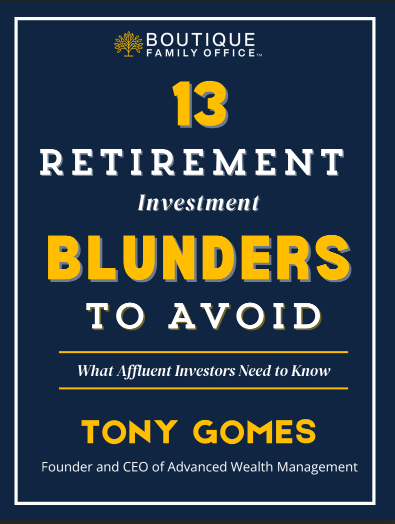
Our complimentary guide 13 Retirement Investment Blunders to Avoid is a practical next step. It explores emotional investing, market timing, inflation, withdrawal mistakes, overconcentration, tax consequences, and sequence-of-returns risk—the areas that can become especially vulnerable when markets react quickly.
Download the guide and use it as a checklist before making a major investment or withdrawal decision.
Want to Go Deeper?
Explore our free self-paced course Your GPS to Holistic Retirement Planning.
This educational course helps families integrate retirement planning, tax strategy, legacy planning, healthcare considerations, and long-term wealth management into a comprehensive roadmap.
Retire once. Stay retired.
Complimentary retirement course + workbook
Let’s build a stronger, smarter plan together.
Schedule your free consultation today
Important Disclosure:This content is for educational purposes only and should not be considered personalized investment, tax, legal, accounting, or medical advice. Advanced Wealth Management, LLC is a Florida Registered Investment Adviser. Advisory services are offered on a fee basis. Investing involves risk, including the possible loss of principal. Advanced Wealth Management, LLC does not provide medical advice, diagnosis, or treatment.References to diagnostic platforms are provided for educational context only and should not be interpreted as endorsements, medical recommendations, or substitutes for guidance from a qualified healthcare provider. Always consult your physician or qualified healthcare provider before making changes to your healthcare, testing, medication, supplement, nutrition, or exercise routine. Please consult qualified tax, legal, insurance, and medical professionals regarding your personal situation.
At AWM, Our Fiduciary Duty Principles™ Define Our Commitment
This commentary is for informational and educational purposes only and is not investment, tax, legal, or accounting advice. Any investment involves risk, including the possible loss of principal. Private and alternative investments may be illiquid, may involve higher fees, may use leverage, may have limited transparency, and may not be suitable for all investors. Liquidity features (including redemption/repurchase programs) are not guaranteed and may be limited, suspended, or modified. Distributions are not guaranteed and may be sourced from factors other than operating cash flow. Tax treatment is complex and investor-specific; consult your tax advisor. Any offering is made only through applicable offering documents and only to eligible investors where lawful.
How We Can Help You
At AWM, we provide personalized, comprehensive guidance for individuals and families. Our services offer peace of mind and confidence through every stage of your financial journey:
- Investment Management: Our globally diversified, tax-efficient portfolios are designed for resilience across market conditions.
- Proactive Tax Planning: We focus on tax-efficient strategies for both accumulation and distribution phases, helping you manage liabilities.
- Integrated Goals-Based Planning: Align all life goals into a unified financial plan to navigate transitions strategically.
Contact AWM today to schedule a confidential consultation and connect with an advisor who can help you achieve your financial goals. For assistance, reach out to us at Service@awmfl.com.
Thank you for your continued trust and engagement.
Tony Gomes, Author, MBA
CEO and Founder
Advanced Wealth Management