

Economic Risks of a Prolonged Strait of Hormuz Closure
Why Energy, Inflation, and Portfolio Quality Matter More Than Ever
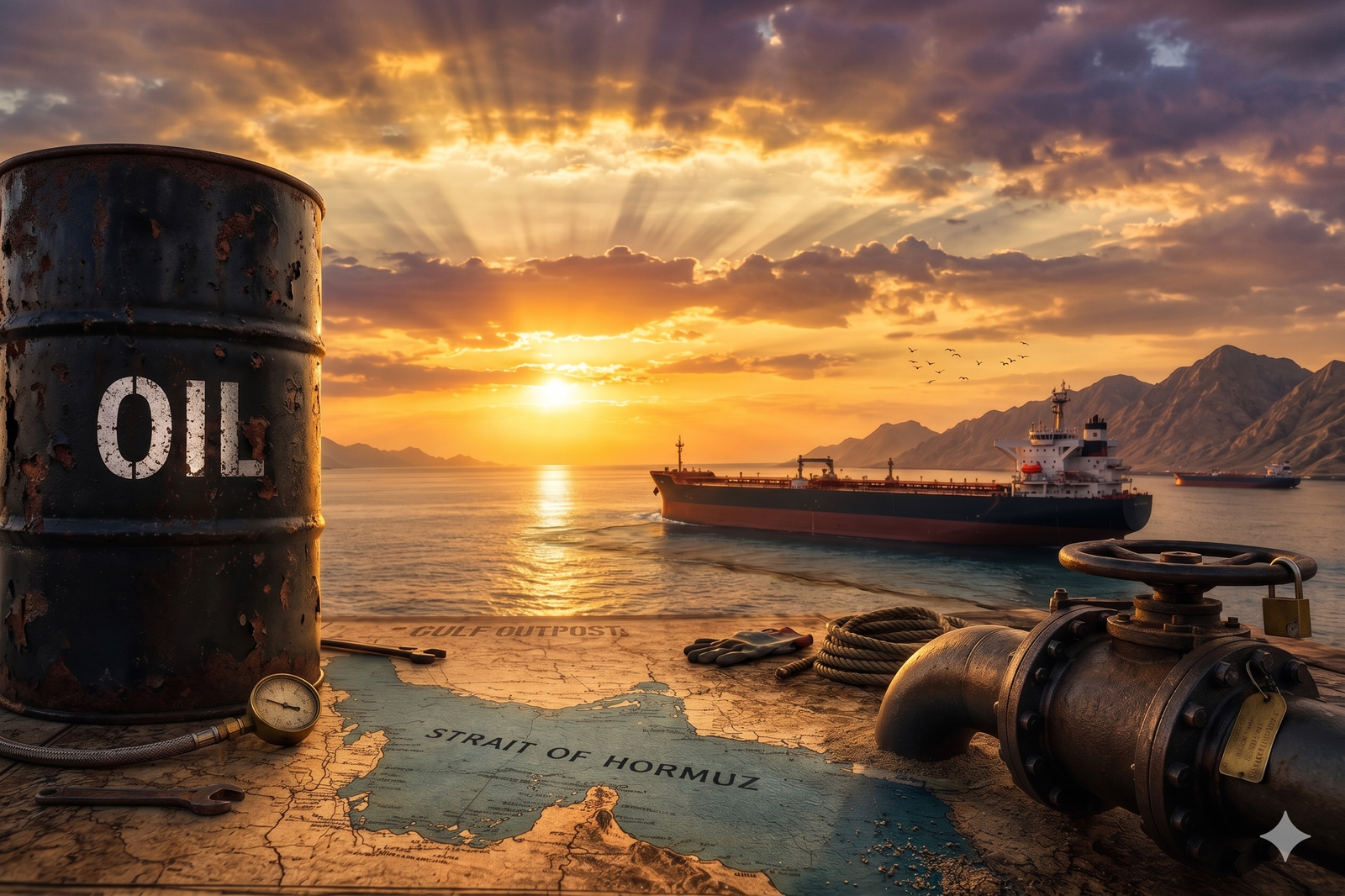
The Strait of Hormuz may be only about 21 miles wide at its narrowest point, but in the global economy, it is one of the biggest “small places” on earth.
Think of it as the world’s energy superhighway. A meaningful percentage of global oil and liquefied natural gas moves through this narrow waterway between Iran and Oman. When that traffic flows smoothly, most people never think about it. But when it gets disrupted, the impact can ripple through oil prices, gas prices, food prices, shipping costs, inflation, interest rates, corporate profits, and ultimately your retirement portfolio.
As I often remind clients: the economy is like the human body. You may feel pain in your shoulder, but the root problem may be in your neck, your spine, or your posture. In the same way, a geopolitical event in the Middle East can show up months later in your grocery bill, airline ticket, bond portfolio, or stock market statement.
Knowledge is power — and in retirement planning, wisdom is knowing what risks matter, what risks are noise, and how to prepare without panic.
Why Hormuz Matters
The Strait of Hormuz is one of the most important energy chokepoints in the world. Roughly one-fifth of global oil consumption and a significant share of seaborne liquefied natural gas, or LNG, passes through this region.
If the Strait were closed for an extended period, the first impact would likely be energy prices. Oil could move meaningfully higher. LNG shipments from Qatar and the Gulf could be delayed or stranded. Countries in Asia and Europe that depend heavily on imported energy would feel the most pressure. And because oil is a global commodity, even countries like the United States, which have more domestic energy production, would not be immune from higher prices.
As Warren Buffett wisely said, “Only when the tide goes out do you learn who has been swimming naked.”
A prolonged energy shock tends to reveal which economies, companies, and investors are truly prepared — and which ones are overextended.
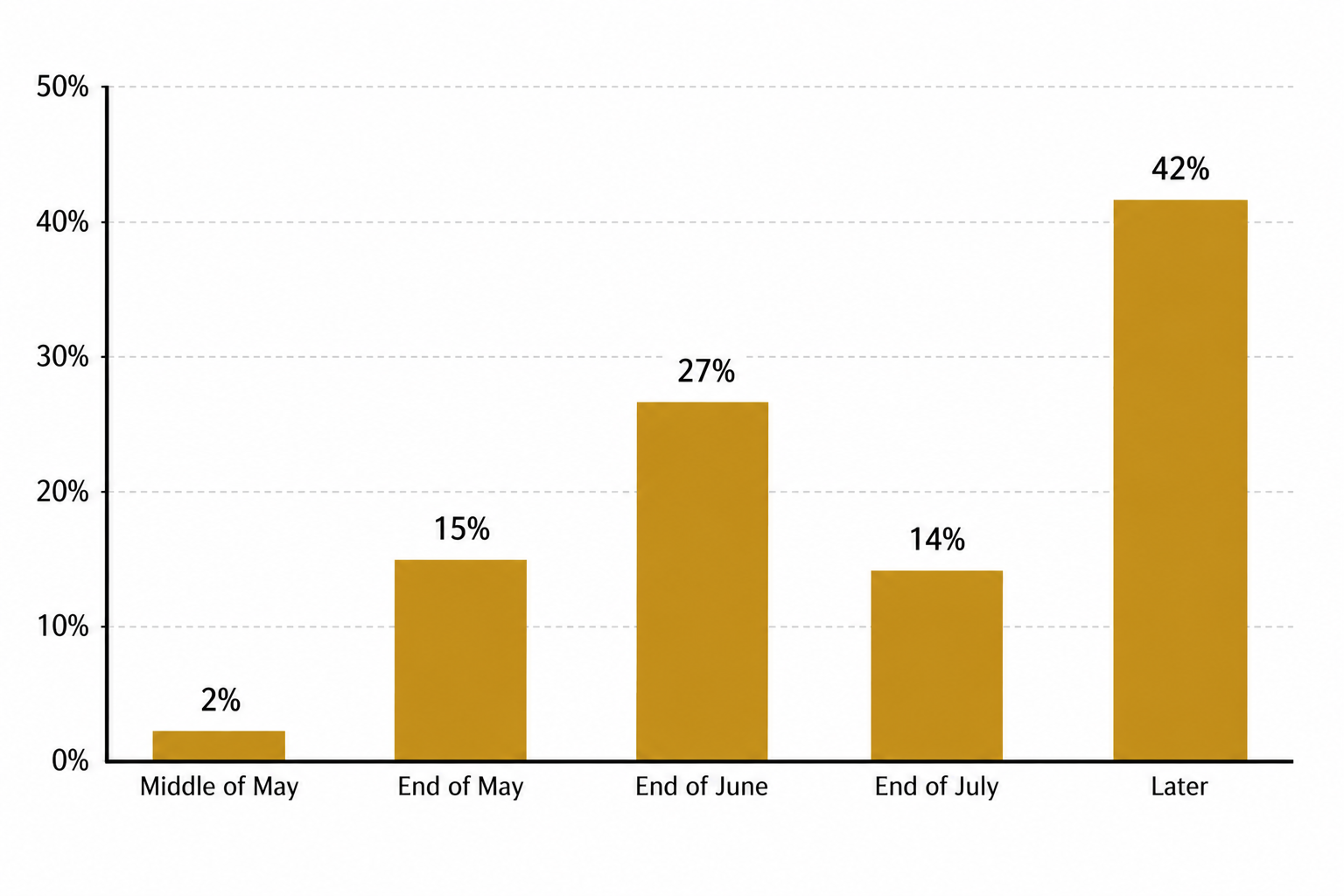
Investor expectations suggest Middle East oil-flow disruptions may take longer to normalize, reinforcing ongoing inflation and energy-market concerns.
Source: Goldman Sachs Briefings Newsletter, May 2026.
The Inflation Problem: Not Just Gasoline
Most people immediately think of gasoline prices when oil rises. That is understandable. Higher prices at the pump are visible, frustrating, and emotional.
But the bigger risk is that energy affects almost everything. Energy is used to produce goods, transport goods, heat buildings, power factories, fly airplanes, run farms, and move food around the world. When energy prices rise, companies face higher input costs. Some absorb those costs. Others pass them on to consumers.
That is how an energy shock can become an inflation shock. And this is where things get tricky for the Federal Reserve and other central banks. If inflation rises because demand is too strong, central banks can raise interest rates to cool things down. But if inflation rises because supply is disrupted, raising rates does not produce more oil, more LNG, or more fertilizer.
That is the classic stagflation problem: higher prices and slower growth at the same time. Nobody likes stagflation. Not consumers. Not businesses. Not politicians. And certainly not retirees living on a planned income strategy.
The Hidden Risk: Food and Fertilizer
One underappreciated risk is fertilizer.
A meaningful portion of global fertilizer and related agricultural inputs moves through or is affected by the Gulf region. If shipping routes are disrupted and fertilizer prices rise, the effect may not appear immediately at the grocery store. It can show up later — during planting, harvesting, and food distribution cycles.
That means an energy shock can eventually become a food inflation shock.
This is why we do not look at financial planning in silos at Advanced Wealth Management. Investment management, tax planning, retirement income, inflation protection, estate planning, insurance, and lifestyle goals are all connected.
That is the heart of our Life Integrated Financial Freedom philosophy. Money is not just numbers on a page. Money is fuel for your life, your family, your health, your purpose, and your peace of mind.
Corporate Profits Could Feel the Pressure
Higher oil, jet fuel, freight, insurance, and shipping costs can pressure corporate profit margins. Some companies have pricing power. They can raise prices without losing many customers. Others do not. They get squeezed.
That distinction matters.
In an inflationary or stagflationary environment, quality becomes more important. Strong balance sheets matter. Durable cash flow matters. Pricing power matters. Disciplined management matters. As John Wooden said, “When opportunity comes, it’s too late to prepare.”
The time to build a resilient retirement and investment strategy is not after the storm hits. It is before.
What This Means for Investors
A prolonged Hormuz closure would not automatically mean investors should panic or make emotional portfolio decisions. In fact, panic is rarely a strategy. It is usually a very expensive hobby.
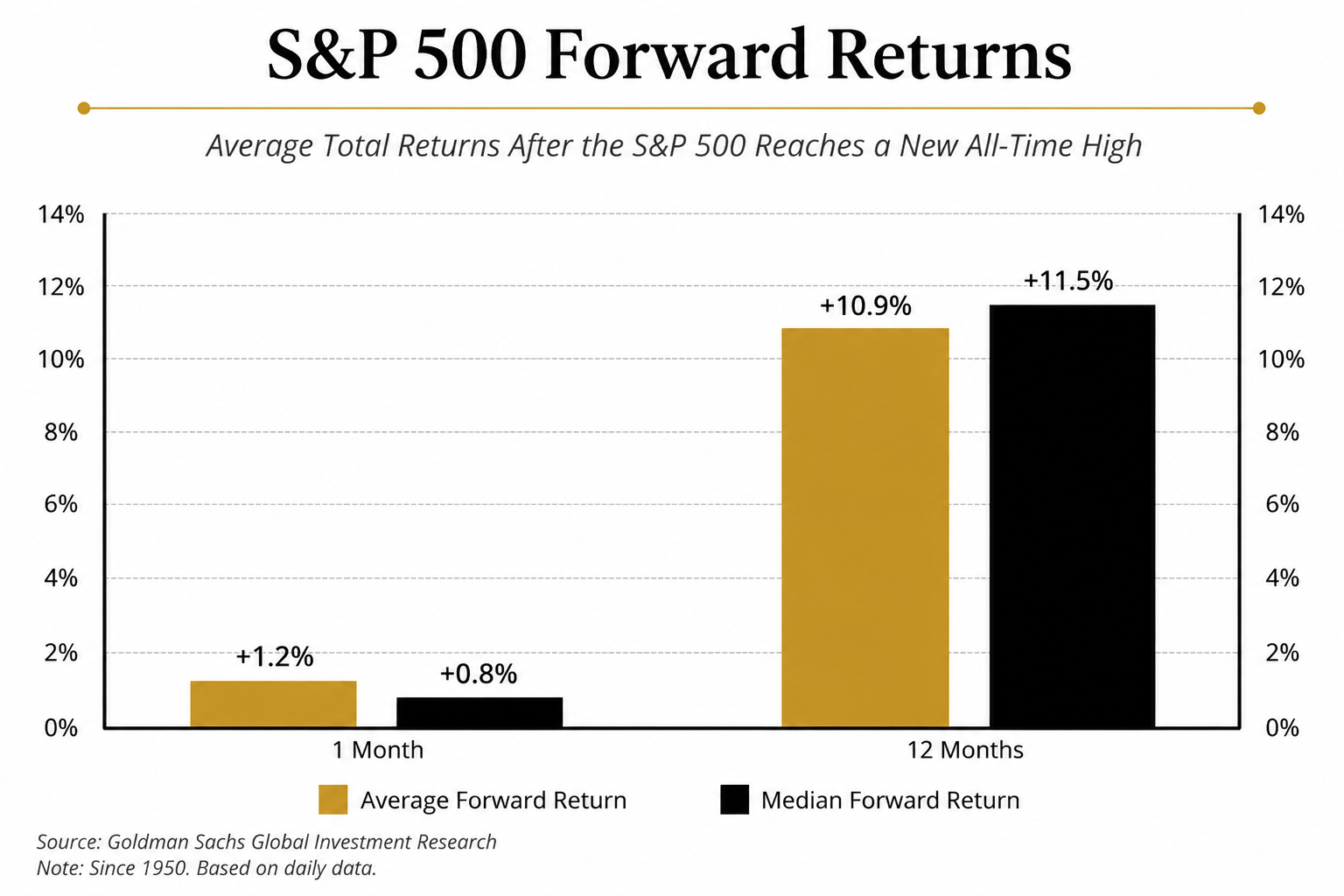
Historical market data shows that while short-term returns after new highs can moderate, longer-term forward returns have often remained constructive.
Source: Goldman Sachs Global Investment Research, May 2026.
But it does mean investors should pay attention to several key areas:
- First, inflation risk may remain more stubborn than expected.
- Second, interest rates may not fall as quickly as markets hope if energy prices reignite inflation pressure.
- Third, companies with weak margins and limited pricing power may struggle.
- Fourth, long-term bonds may remain vulnerable if inflation expectations rise.
- Fifth, portfolios should be reviewed for quality, diversification, income reliability, and exposure to sectors most sensitive to energy and shipping costs.
This is why we focus on planning, not predicting. No one can consistently predict wars, oil shocks, elections, recessions, or Federal Reserve decisions. But we can prepare. We can stress test. We can diversify. We can build retirement income plans that are not dependent on everything going perfectly.
As Benjamin Franklin said, “By failing to prepare, you are preparing to fail.”
The Retirement Planning Lesson
For retirees and pre-retirees, the key question is not, “What will oil do next week?”
The better question is, “Is my financial plan built to handle inflation, volatility, taxes, healthcare costs, market declines, and unexpected global events?” That is a much more useful question.
At Advanced Wealth Management, our goal is to help clients make smart, informed, confident decisions. We cannot control the Strait of Hormuz. We cannot control oil prices. We cannot control central banks. We cannot control politicians.
- But we can control preparation.
- We can control risk management.
- We can control tax planning.
- We can control how much income we need from the portfolio.
- We can control how portfolios are positioned.
We can control whether we have a written retirement income strategy, estate plan, insurance review, and proactive tax plan.
And most importantly, we can control our mindset.
Jesus said, “Do not worry about tomorrow, for tomorrow will worry about itself.” That does not mean we ignore risk. It means we prepare faithfully, act wisely, and refuse to let fear drive the bus.
Bottom Line
A prolonged closure of the Strait of Hormuz would be more than a Middle East geopolitical event. It could become an energy shock, an inflation shock, a corporate earnings shock, and a central bank challenge all at once. Markets may be underestimating how quickly higher energy and shipping costs can flow through the global economy. Investors should not overreact, but they should be thoughtful. In times like this, quality matters. Planning matters. Diversification matters. Income strategy matters. Wisdom matters.Or as my old corporate background at PepsiCo, IBM, Quaker Oats, Gatorade, and Tropicana taught me: great organizations do not wait for the crisis to start planning. They prepare, adapt, and execute.
Retirement planning should work the same way.
Disclosure:This commentary is for informational and educational purposes only and should not be considered personalized investment advice. Each investor’s situation is unique, and investment decisions should be made in consultation with a qualified financial professional.
Let’s build a stronger, smarter plan together.
Schedule your free consultation today
At AWM, Our Fiduciary Duty Principles™ Define Our Commitment
This commentary is for informational and educational purposes only and is not investment, tax, legal, or accounting advice. Any investment involves risk, including the possible loss of principal. Private and alternative investments may be illiquid, may involve higher fees, may use leverage, may have limited transparency, and may not be suitable for all investors. Liquidity features (including redemption/repurchase programs) are not guaranteed and may be limited, suspended, or modified. Distributions are not guaranteed and may be sourced from factors other than operating cash flow. Tax treatment is complex and investor-specific; consult your tax advisor. Any offering is made only through applicable offering documents and only to eligible investors where lawful.
How We Can Help You
At AWM, we provide personalized, comprehensive guidance for individuals and families. Our services offer peace of mind and confidence through every stage of your financial journey:
- Investment Management: Our globally diversified, tax-efficient portfolios are designed for resilience across market conditions.
- Proactive Tax Planning: We focus on tax-efficient strategies for both accumulation and distribution phases, helping you manage liabilities.
- Integrated Goals-Based Planning: Align all life goals into a unified financial plan to navigate transitions strategically.
Contact AWM today to schedule a confidential consultation and connect with an advisor who can help you achieve your financial goals. For assistance, reach out to us at Service@awmfl.com.
Thank you for your continued trust and engagement.
Tony Gomes, Author, MBA
CEO and Founder
Advanced Wealth Management