

Strong Earnings, Higher Rates: Which Story Matters More for Retirees This Fall?

Corporate profits remain strong, but oil, inflation and rising Treasury yields are keeping the Federal Reserve on alert. For retirees, the real question is not which market story wins next. It is whether your retirement strategy is prepared for either one.
As September begins, investors are receiving two very different messages from the markets. Corporate profits have been remarkably strong, supported in part by continued investment in artificial intelligence and technology infrastructure. At the same time, inflation concerns have returned to the foreground as oil prices move higher and Treasury yields climb. Those pressures have renewed speculation that the Federal Reserve could raise interest rates again this fall.
For retirees, both stories matter because each affects a different part of the financial picture. Strong earnings can support long-term stock returns. Higher interest rates can improve the income available from cash and bonds, but they can also pressure existing bond prices and expensive stocks. The challenge is resisting the temptation to reorganize a retirement strategy every time one of these narratives takes the lead.
Strong Earnings Continue to Support the Market
Corporate America has given investors a solid fundamental reason to remain constructive. Second-quarter earnings for companies in the S&P 500 increased about 33.5% from a year earlier, the strongest growth rate since 2021. Better-than-expected earnings and continued investment tied to artificial intelligence have helped support stock prices despite an unsettled economic backdrop.
The significance goes beyond a handful of large technology companies. Investors have also been looking for signs that market participation is broadening into other industries. A healthier market does not require every company or sector to rise together, but broader profit growth can reduce some of the dependence on the largest technology stocks that have driven much of the market’s advance.
For long-term retirement assets, that matters. Stocks ultimately represent ownership in businesses, and growing corporate profits provide an important foundation for long-term wealth creation. The strength of the earnings story is one reason that reacting too quickly to every market concern can carry its own risk.
Higher Rates Are Creating a Very Different Story
Bond markets are delivering a less comfortable message. On August 31, the 10-year Treasury yield rose to about 4.77%, its highest level since January 2025. Brent crude also settled above $90 per barrel as renewed fighting between the United States and Iran increased concerns about energy supplies and inflation.
Higher oil prices matter because energy costs can find their way into transportation, manufacturing and household expenses. Persistent inflation can also give the Federal Reserve less flexibility to lower interest rates. Following Fed Chair Kevin Warsh’s recent comments, markets sharply increased expectations for a possible rate increase at the September meeting. The Federal Reserve’s next scheduled meeting is September 15–16.
This environment creates both opportunities and risks for retirees. Cash and high-quality fixed-income investments can offer considerably more income than they did during the years of near-zero interest rates. However, retirees should be careful about assuming that a higher stated yield automatically makes an investment appropriate. Maturity, liquidity and the role an asset plays in the retirement plan still matter.
The Jobs Report Could Move the Debate Again
The next important economic signal arrives Friday, September 4, when the Bureau of Labor Statistics releases the August employment report at 8:30 a.m. Eastern. The report will give investors another indication of whether the labor market is slowing enough to reduce inflation pressure or remaining strong enough to support further monetary tightening.
Markets may react quickly to the result. Treasury yields could move. Expectations for the Fed could change again. Stocks may interpret the same employment number very differently depending on what it implies for economic growth and inflation.
A retirement plan, however, has a much longer time horizon than a Friday morning market reaction.
Retirement Planning Requires a Different Lens
At Boutique Family Office™, we believe the starting point for an investment decision should be the purpose of the money rather than a prediction about the next Federal Reserve meeting. A dollar that may be needed to pay expenses next year has a very different job from a dollar intended to grow for another 15 or 20 years.
Our SWAG Retirement Roadmap™ organizes retirement assets around four time horizons: Income Now, Income Later, Growth and Legacy. That structure can help prevent a temporary market event from becoming a long-term planning mistake. Higher yields may create opportunities for money assigned to future income. Strong corporate earnings may continue to support investments whose primary job is long-term growth.
The broader Boutique Family Office™ approach also recognizes that investments do not operate in isolation. Portfolio income can influence taxes. Withdrawal decisions can affect how much taxable income appears in a particular year. Roth conversions and other planning strategies can change the amount of income a household wants its investments to generate. Coordinating those decisions can be more valuable than simply chasing the investment offering the highest current yield.
This is especially important for retirees because withdrawals change the investment equation. Someone who is still accumulating wealth may have decades to wait through a market decline. A retiree who needs portfolio distributions does not always have that luxury. Creating sufficient liquidity for near-term spending can give long-term investments the time they need to recover from normal market volatility.
Three Questions Worth Asking Before Fall
Rather than trying to determine whether earnings or interest rates will control the market next, retirees can use the current environment to test three parts of their plan:
- Income: Is enough money available for near-term spending without depending on selling long-term investments after a market decline?
- Interest rates: Are cash and fixed-income holdings positioned intentionally for today’s environment rather than simply accumulated because they feel safe?
- Growth: Does the portfolio still have enough long-term growth potential to address inflation and a retirement that could last decades?
These questions shift the conversation away from predicting markets and toward building a plan that can function through several different outcomes.
Which Market Story Matters More?
Strong earnings and higher rates are not mutually exclusive. In fact, the tension between them may define the market this fall. Corporate profits can remain healthy while inflation keeps interest rates elevated. Stocks can produce long-term gains while experiencing short-term corrections. Bonds can offer attractive income while still being vulnerable to changing rates.
For retirees, the objective should not be to correctly forecast which of those forces wins over the next three months. The more important test is whether income needs, liquidity and long-term growth have been coordinated well enough that the retirement plan does not depend on getting that forecast right.
Friday’s employment report may change expectations for the Federal Reserve. Oil prices may move again. Earnings forecasts will be revised. Those developments deserve attention, but they should be treated as information that helps evaluate a retirement strategy rather than instructions to abandon one.
Avoid the Investment Mistakes That Can Disrupt a Retirement Plan
Periods of changing interest rates and market uncertainty can make short-term investment decisions feel unusually important. Our complimentary 13 Retirement Investment Blunders to Avoid guide explores common mistakes that can quietly undermine a retirement strategy, including emotional investing, market timing, inflation risk and sequence-of-returns risk.
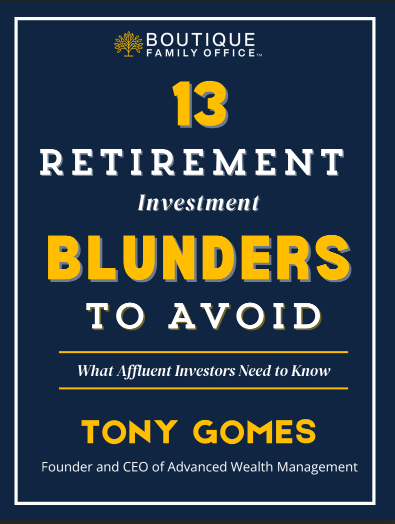
For a broader look at how retirement income, investments and long-term planning can work together, explore our complimentary Your GPS to Holistic Retirement Planning course. It provides a practical framework for building a retirement strategy around your goals rather than the market’s latest headline.
Start Your GPS to Holistic Retirement Planning →
Retire once. Stay retired.
Complimentary retirement course + workbook
Let’s build a stronger, smarter plan together.
Schedule your free consultation today.
At AWM, Our Fiduciary Duty Principles™ Define Our Commitment
This commentary is for informational and educational purposes only and is not investment, tax, legal, or accounting advice. Any investment involves risk, including the possible loss of principal. Private and alternative investments may be illiquid, may involve higher fees, may use leverage, may have limited transparency, and may not be suitable for all investors. Liquidity features (including redemption/repurchase programs) are not guaranteed and may be limited, suspended, or modified. Distributions are not guaranteed and may be sourced from factors other than operating cash flow. Tax treatment is complex and investor-specific; consult your tax advisor. Any offering is made only through applicable offering documents and only to eligible investors where lawful.
How We Can Help You
At AWM, we provide personalized, comprehensive guidance for individuals and families. Our services offer peace of mind and confidence through every stage of your financial journey:
- Investment Management: Our globally diversified, tax-efficient portfolios are designed for resilience across market conditions.
- Proactive Tax Planning: We focus on tax-efficient strategies for both accumulation and distribution phases, helping you manage liabilities.
- Integrated Goals-Based Planning: Align all life goals into a unified financial plan to navigate transitions strategically.
Contact AWM today to schedule a confidential consultation and connect with an advisor who can help you achieve your financial goals. For assistance, reach out to us at Service@awmfl.com.
Thank you for your continued trust and engagement.
Tony Gomes, Author, MBA
CEO and Founder
Advanced Wealth Management