

The Fed May Move Markets. Should It Move Your Retirement Plan?

With growth slowing, inflation cooling but still elevated, Big Tech earnings under review, and oil prices moving on geopolitical headlines, the question is not what markets do next. It is whether your plan is coordinated enough to handle several outcomes at once.
By Tony Gomes
Advanced Wealth Management™ / Boutique Family Office™
Market Perspective | Thursday, July 30, 2026
The Federal Reserve decided this week to leave interest rates unchanged. Markets may debate whether that was the right move. Retirees should ask a different question:
Does a Fed pause actually change the way your retirement plan should be managed?
Usually, no.
A single Fed decision rarely rewrites a serious retirement plan. But this week’s news does give families a useful reason to review the assumptions underneath the plan.The Fed held steady, but the economy is not standing still. Second-quarter growth came in slower than expected, around the 1.5% to 1.6% range. Inflation improved in June, helped in part by lower oil prices, but it remains well above the Fed’s 2% target. Big Tech earnings are still under scrutiny as investors question whether massive AI-related capital spending will eventually translate into durable profits. Oil prices remain sensitive to developments in the Middle East.
That combination matters. Not because it tells us exactly what markets will do tomorrow, but because it shows why retirement planning cannot depend on one forecast, one data point, or one central bank decision.
The Fed Pause Is Not the Whole Story
The Fed’s decision to hold rates steady may feel like a relief to some investors. It suggests policymakers are not ready to tighten further today, even with inflation still elevated. But a pause is not the same as an all-clear signal.
Inflation remains above target. The economy is still growing, but more slowly than expected. Consumer spending remains important, but households are still dealing with higher prices. Business investment, especially in AI-related infrastructure, continues to support parts of the economy, but it also raises questions about whether expectations have moved too far too fast. For retirees, the key point is not whether the Fed held rates this week.
The key point is whether the plan can handle an environment where rates stay higher, growth slows, inflation remains uneven, and market leadership continues to depend heavily on a small number of companies. That is a planning question, not a trading question.
Growth Is Slower, But Not Broken
A slower GDP number can make investors nervous, especially when markets are near highs. But slower growth does not automatically mean recession, just as a strong quarter does not automatically mean the coast is clear. The more useful interpretation is that the economy may be moving into a more selective phase. Some areas remain resilient. Others are under pressure. Consumers may still be spending, but the cost of living continues to shape behavior. Businesses may still be investing, but higher rates and inflation make the hurdle for success higher.
For business owners, this matters because slower growth can affect revenue, margins, hiring, credit conditions, and eventual business valuation. For retirees, it matters because slower growth can affect portfolio returns, dividend growth, bond yields, inflation expectations, and withdrawal confidence. The planning implication is straightforward: do not build a retirement income plan that only works in a strong-growth environment.
Inflation Is Better, But Not Solved
June inflation data provided some welcome improvement. The Fed’s preferred inflation measure slowed, and the monthly reading was softer than it has been in years. That is good news. But inflation is still not back to normal. Core inflation remains above the Fed’s target, and energy prices can move quickly if geopolitical conditions change. A temporary decline in oil prices may help the data, but retirees know inflation is not experienced only through gasoline.
Healthcare costs, insurance premiums, property expenses, travel, food, home maintenance, and taxes can all rise at different speeds. That is why retirement planning should not rely on one headline inflation number. A family’s personal inflation rate may be very different from the national average. A coordinated plan should account for the expenses that matter most to that household.
Big Tech Still Matters Because Concentration Still Matters
This week is also about earnings.
Several large technology companies remain central to market performance, especially because AI-related spending has become one of the defining investment themes of the year. The opportunity is real. So is the risk of overconcentration. When a handful of companies represent a large share of index performance, many investors may own more of the same theme than they realize. They may hold multiple funds across several accounts and still be exposed to the same economic driver.
That does not mean investors should avoid technology. It means they should understand what they own. A portfolio can look diversified by account count and still be concentrated by risk driver. For retirees taking withdrawals, that distinction matters. Concentration risk is easier to ignore when markets are rising. It becomes harder to ignore when withdrawals are needed during a decline.
A Market Reaction Is Not a Retirement-Planning Reaction
Markets respond quickly to news. A Fed statement, GDP report, inflation number, earnings release, or oil headline can move prices in minutes. A retirement plan should not move that way. A trader may care deeply about whether the Fed hints at a future hike. A retiree should care about whether income needs can be funded if rates remain elevated, whether the bond portfolio is structured properly, whether tax decisions are coordinated, and whether the portfolio has become too dependent on one market theme.
That is the better question. Not, “What did the market do after the Fed?” But, “Can my income, liquidity, tax plan, and portfolio structure handle a market that does not cooperate?”
Five Plan-Quality Tests After This Week’s News
This week’s headlines are useful if they prompt the right review.
- First, check near-term income. Scheduled withdrawals, taxes, healthcare costs, and major expenses should not depend on selling long-term investments during a bad market week.
- Second, review bond structure. Higher rates can create better income opportunities, but they can also pressure bond values. Maturities, duration, credit quality, and cash-flow needs should match the role each holding is meant to play.
- Third, measure technology concentration. AI and Big Tech may remain important long-term themes, but households should know how much exposure they actually have across all accounts.
- Fourth, revisit tax exposure. Roth conversions, gain harvesting, loss harvesting, charitable planning, withdrawal order, Social Security taxation, Medicare IRMAA, and future RMDs should be reviewed as part of a multiyear tax plan.
- Fifth, review liquidity. Cash reserves, public investments, private investments, income sources, and spending needs should work together. A stated yield is not the same as available cash.
None of these reviews requires a prediction. They require coordination.
The Boutique Family Office™ Perspective
At Boutique Family Office™, we do not treat Fed weeks as prediction contests. We treat them as plan-quality tests. The Fed pause matters. Slower GDP matters. Inflation matters. Big Tech earnings matter. Oil prices matter. But they matter most because of how they interact with the family’s full financial picture.
Cash reserves affect how much volatility a family can tolerate. Bond structure affects future income. Concentrated positions affect both risk and taxes. Roth conversions may affect Medicare premiums, future RMDs, and inherited wealth. Charitable planning may affect both the tax return and the investment portfolio. Private investments may affect how quickly the family can respond when circumstances change. These are not separate decisions. They are one coordinated plan. The SWAG Retirement Roadmap organizes wealth by purpose and time horizon so short-term income is not dependent on long-term market bets. The goal is not to predict every Fed decision, earnings report, inflation release, or oil move. The goal is to make sure the family’s wealth can adapt when markets, tax laws, and life circumstances change.
That is the difference between reacting to headlines and building planning resilience.
Review the Plan, Not Just the Fed
This week gave investors more than a Fed decision. It gave them a slower growth number, a softer but still elevated inflation reading, another round of Big Tech earnings scrutiny, and continued uncertainty around oil and geopolitical risk.
Markets will react to all of it. Your retirement plan should be held to a higher standard. A resilient plan should be able to function across higher or lower rates, faster or slower growth, broader or narrower market leadership, and continued volatility in energy prices.
So, should this week’s Fed decision change your retirement plan? Usually, no. But this week’s combination of news should encourage you to confirm that your plan is still capable of funding your life when markets, inflation, interest rates, and economic growth do not cooperate at the same time. The right response to a major headline is not automatically to abandon the plan. It is to determine whether the headline has exposed a weakness that should be addressed.
That is planning resilience. And it is why retirement planning must go well beyond choosing investments.
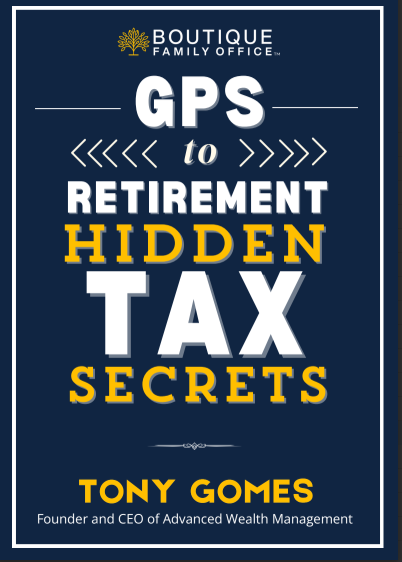
Continue Learning: Your GPS to Hidden Tax Secrets in Retirement
If this week’s events have raised questions about Roth conversions, withdrawal order, Medicare IRMAA, Social Security taxation, charitable planning, RMDs, or how market volatility may affect tax decisions, our Your GPS to Hidden Tax Secrets in Retirement guide is a helpful next step.
It explains why tax planning in retirement is not just about what you earn. It is about what you keep, when you recognize income, which accounts you draw from, and how today’s decisions may affect future income, healthcare costs, and legacy planning.
Watch the Free Retirement Course
You can also watch our free course, Your GPS to Holistic Retirement Planning, where we walk through how retirement income, investments, taxes, Social Security, healthcare costs, and legacy planning fit together.
The course is educational, self-paced, and designed to help you understand the bigger planning picture before reacting to the next market headline.
Retire once. Stay retired.
The Fed may move markets this week. Big Tech may move indexes. Oil may move inflation expectations. But none of those should automatically move your retirement plan. A serious plan is built around income, liquidity, taxes, risk, healthcare, estate planning, and family goals. The purpose is not to avoid every market surprise. The purpose is to avoid letting every surprise become a financial emergency.
- Review the plan.
- Find the weak spots.
- Coordinate the decisions.
That is how affluent families move from market reaction to retirement resilience.
Important Disclosure:This content is for educational purposes only and should not be considered personalized investment, tax, legal, accounting, or medical advice. Advanced Wealth Management, LLC is a Florida Registered Investment Adviser. Advisory services are offered on a fee basis. Investing involves risk, including the possible loss of principal. Advanced Wealth Management, LLC does not provide medical advice, diagnosis, or treatment.References to diagnostic platforms are provided for educational context only and should not be interpreted as endorsements, medical recommendations, or substitutes for guidance from a qualified healthcare provider. Always consult your physician or qualified healthcare provider before making changes to your healthcare, testing, medication, supplement, nutrition, or exercise routine. Please consult qualified tax, legal, insurance, and medical professionals regarding your personal situation.
At AWM, Our Fiduciary Duty Principles™ Define Our Commitment
This commentary is for informational and educational purposes only and is not investment, tax, legal, or accounting advice. Any investment involves risk, including the possible loss of principal. Private and alternative investments may be illiquid, may involve higher fees, may use leverage, may have limited transparency, and may not be suitable for all investors. Liquidity features (including redemption/repurchase programs) are not guaranteed and may be limited, suspended, or modified. Distributions are not guaranteed and may be sourced from factors other than operating cash flow. Tax treatment is complex and investor-specific; consult your tax advisor. Any offering is made only through applicable offering documents and only to eligible investors where lawful.
How We Can Help You
At AWM, we provide personalized, comprehensive guidance for individuals and families. Our services offer peace of mind and confidence through every stage of your financial journey:
- Investment Management: Our globally diversified, tax-efficient portfolios are designed for resilience across market conditions.
- Proactive Tax Planning: We focus on tax-efficient strategies for both accumulation and distribution phases, helping you manage liabilities.
- Integrated Goals-Based Planning: Align all life goals into a unified financial plan to navigate transitions strategically.
Contact AWM today to schedule a confidential consultation and connect with an advisor who can help you achieve your financial goals. For assistance, reach out to us at Service@awmfl.com.
Thank you for your continued trust and engagement.
Tony Gomes, Author, MBA
CEO and Founder
Advanced Wealth Management