

Markets May Welcome Peace Talks. Your Retirement Plan Needs More Than Headlines.

Whether the Iran situation improves or worsens, peace talks are not a retirement strategy. The real work is coordinating income, taxes, cash flow, healthcare, portfolio structure, and family legacy.
A BFOCFO Wealth Insight on oil prices, interest rates, market volatility, and the planning decisions retirees should focus on now.
Markets can change direction quickly.
One week, investors are worried about Iran, oil prices, the Strait of Hormuz, inflation, and the Federal Reserve. The next week, a headline about peace negotiations gives markets a little breathing room, oil prices ease, and technology stocks try to lead again.
That is how markets work.
But that is not how a retirement plan should work.
For affluent retirees, business owners, and corporate executives approaching retirement, the question is not, “What will happen next in Iran?” The better question is, “Is my financial life built to handle a world where headlines can change faster than my plan?”
Peace talks matter. Oil prices matter. Interest rates matter. AI earnings matter. But none of them should become your retirement strategy.
The Headlines Everyone Is Watching
The current market environment has no shortage of big headlines.
Iran peace negotiations have raised hopes that oil markets may stabilize. Lower oil prices can ease inflation pressure, reduce fuel costs, and improve sentiment across travel, transportation, and consumer-related sectors.
At the same time, shipping traffic around the Strait of Hormuz remains a sensitive issue. If the region calms, oil prices may continue to ease. If tensions return, energy prices can move quickly in the other direction.
Meanwhile, Treasury yields remain elevated, with the 10-year Treasury hovering around the 4.5% level. The Federal Reserve remains focused on inflation, and investors are watching PCE inflation data, GDP revisions, housing data, and retail activity for signs of where the economy may be headed.
Technology and AI continue to support earnings growth, especially in chips, infrastructure, and data center spending. Bitcoin remains volatile. Market concentration remains a concern. And geopolitical uncertainty has not disappeared simply because one headline improved.
That is a lot for any investor to process. But retirees do not need to react to every headline. They need to understand which headlines actually affect their plan.
What Retirees Should Actually Be Paying Attention To
Most market commentary focuses on what stocks did this morning, where oil traded, what bitcoin is doing, and whether the Fed might change rates.
Useful? Sometimes. Sufficient? Not even close.
Retirees should be paying attention to five practical questions:
Will my income plan still work if interest rates stay elevated?
Do I have enough liquidity to avoid selling long-term assets during volatility?
Are my withdrawals coordinated with taxes, Medicare premiums, and Roth conversion opportunities?
Have we stress-tested healthcare and long-term care costs?
Is my estate plan aligned with my current assets, beneficiaries, and family goals?
That is the real work.
A retiree can be right about oil prices and still make a poor withdrawal decision. A business owner can be right about the Fed and still miss a tax planning opportunity. A corporate executive can be right about AI and still be overconcentrated in company stock or technology exposure.
Markets reward discipline over headlines.
Why Interest Rates Matter More Than Peace Talks
Peace talks may move oil prices. Interest rates can move almost everything else.
Higher rates affect bond values, borrowing costs, mortgage rates, business valuations, private credit, real estate, annuities, cash yields, and retirement income planning. They also affect the math behind Roth conversions, charitable strategies, and estate planning.
For retirees, elevated rates create both challenges and opportunities.
The challenge is that bonds and rate-sensitive assets can remain volatile. Real estate financing costs may stay higher. Business owners may face more expensive credit. Growth stocks may be more sensitive to earnings disappointments.
The opportunity is that cash and short-term fixed income may finally provide meaningful yield again. Certain income strategies may look more attractive than they did in the zero-rate years. And higher rates can create planning windows for retirees who want to reposition assets with more purpose.
This is why we do not build plans around guessing the Fed. We build plans around what the Fed environment means for income, taxes, risk, and liquidity.
The Retirement Paycheck Test
Every retiree should run a simple test: If markets dropped 15% tomorrow, where would my next 24 months of income come from?
That question cuts through the noise.
If your answer is, “I would sell whatever is down the least,” you do not have a paycheck plan. You have a portfolio with hope attached.
The SWAG™ Retirement Roadmap is designed to solve that problem by giving every dollar a job and a time horizon.
Income Now is for essential spending and near-term cash flow.
Income Later is for future lifestyle needs, travel, family support, and flexible spending.
Growth is for long-term purchasing power and turning volatility into opportunity.
Legacy is for family, charitable goals, estate planning, and future generations.
This structure matters because it reduces the odds that a retiree is forced to sell long-term growth assets during short-term volatility.
Peace talks may help markets. But your income plan should not depend on peace talks.
Strategic Planning Opportunities Right Now
This environment may create several planning opportunities.
First, review your cash and income reserves. If interest rates are elevated, cash should not be ignored, but it should also not become a hiding place for money that needs long-term growth.
Second, revisit Roth conversions. If markets wobble or taxable income is temporarily lower, there may be windows to convert IRA assets at more attractive tax levels before future RMDs begin.
Third, review withdrawal order. Pulling from taxable, tax-deferred, and Roth accounts in the wrong order can increase lifetime taxes, trigger Medicare IRMAA surcharges, and reduce flexibility later.
Fourth, review healthcare funding. Inflation does not only show up at the gas pump. Healthcare, insurance, long-term care, and prescription costs can rise even when headline inflation improves.
Fifth, review concentration. AI-driven earnings growth has been powerful, but many investors may have more exposure to the same few market drivers than they realize. A portfolio can look diversified by fund count and still be concentrated by economic exposure.
Sixth, review estate and family legacy documents. Market volatility is not the only risk. Outdated beneficiaries, old trusts, poor titling, missing healthcare directives, and unclear family communication can create damage that no market rally can fix.
The Boutique Family Office™ Perspective
At Boutique Family Office™, we believe market updates are only useful if they help families make better planning decisions.
That means we do not stop at oil prices, Fed odds, AI earnings, or bitcoin charts. We ask how those developments affect the full financial picture:
Retirement income
Tax planning
Cash flow
Healthcare costs
Portfolio structure
Risk management
Estate planning
Family legacy
Wealthspan™
That is the difference between traditional investment commentary and integrated wealth planning. A traditional advisor may ask, “Should we adjust the portfolio?”
A Boutique Family Office™ review asks, “How does this market environment affect the entire family balance sheet, and what decisions should be coordinated now?” Those are very different questions.
Proactive Planning Moves
To move beyond headline-driven investing, families, business owners, and retirees should focus on the planning decisions they can control:
Review near-term cash flow: Confirm that the next 12 to 24 months of income needs are not dependent on selling long-term growth assets during market volatility.
Stress-test your retirement plan: Model how your plan holds up under higher interest rates, rising healthcare costs, inflation spikes, and longer life expectancy.
Evaluate tax-planning windows: Review whether current market conditions create opportunities for Roth conversions, tax-loss harvesting, or bracket management before year-end.
Audit concentration risk: Look beyond the number of funds you own and identify whether your wealth is overly dependent on AI, technology, employer stock, business equity, or one economic theme.
Optimize withdrawal order: Coordinate withdrawals across taxable, tax-deferred, and Roth accounts to help manage lifetime taxes and Medicare-related income thresholds.
Review private market suitability: For qualified investors, evaluate whether private credit, private real estate, or other Private Market Alpha™ strategies may have a role within the broader plan.
Update legacy documents: Make sure trusts, beneficiary designations, healthcare directives, and family legacy instructions still reflect your current goals and family situation.
These are not panic moves. They are deliberate planning moves.
Take the Next Step
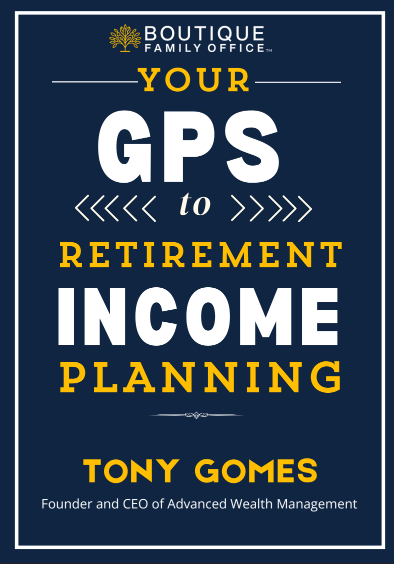
To learn how to organize income, taxes, investments, healthcare planning, and legacy goals into one coordinated retirement strategy, download our GPS to Retirement Planning Guide.
Final Thoughts
Peace talks are good news when they reduce human suffering, lower geopolitical risk, and calm markets. But peace talks are not a retirement strategy.
Oil prices may fall. Or they may rise again. The Fed may hold rates steady. Or it may tighten further. AI may keep powering earnings. Or investors may eventually question the pace of spending. Bitcoin may bounce. Or it may remain volatile. None of that changes the core responsibility of a serious retirement plan. Your income needs to be organized. Your taxes need to be managed. Your cash flow needs to be durable. Your healthcare costs need to be planned for. Your estate documents need to match your life. Your portfolio needs to serve your goals, not the other way around. That is the purpose of the SWAG™ Retirement Roadmap. It helps families move from headline-driven investing to purpose-driven planning.
Markets will always have another story. Your retirement deserves a strategy.
Beyond the Headlines: Building a Retirement Plan That Lasts.
Market headlines will always fluctuate. Inflation, interest rates, elections, and Federal Reserve policy changes will continue to create short-term noise. But the far larger macroeconomic shift is longevity.
If precision medicine helps you stay healthier longer, retirement planning must evolve. Your portfolio must fund not only basic income, but also your physical independence and advanced healthcare choices.
That is why we created Your GPS to Holistic Retirement Planning—a free, self-paced course designed to help successful families and proactive retirees integrate wealthspan with healthspan, stress-test a longer horizon, and turn accumulated savings into a resilient financial engine.
Retire once. Stay retired.
Disclosure:This content is for educational purposes only and is not medical, legal, tax, insurance, accounting, or individualized investment advice. Consult your physician and qualified professionals before making changes to your health, financial, tax, legal, insurance, or estate plan.This article discusses broad trends in longevity science and retirement planning. It does not suggest that any technology, therapy, supplement, screening, or medical intervention will extend life, cure disease, or be appropriate for any individual. Health decisions should be reviewed with qualified healthcare professionals.Investing involves risk, including possible loss of principal. Medicare, Social Security, tax, healthcare, insurance, and estate rules may change and should be reviewed with qualified professionals.
Let’s build a stronger, smarter plan together.
Schedule your free consultation today
At AWM, Our Fiduciary Duty Principles™ Define Our Commitment
This commentary is for informational and educational purposes only and is not investment, tax, legal, or accounting advice. Any investment involves risk, including the possible loss of principal. Private and alternative investments may be illiquid, may involve higher fees, may use leverage, may have limited transparency, and may not be suitable for all investors. Liquidity features (including redemption/repurchase programs) are not guaranteed and may be limited, suspended, or modified. Distributions are not guaranteed and may be sourced from factors other than operating cash flow. Tax treatment is complex and investor-specific; consult your tax advisor. Any offering is made only through applicable offering documents and only to eligible investors where lawful.
How We Can Help You
At AWM, we provide personalized, comprehensive guidance for individuals and families. Our services offer peace of mind and confidence through every stage of your financial journey:
- Investment Management: Our globally diversified, tax-efficient portfolios are designed for resilience across market conditions.
- Proactive Tax Planning: We focus on tax-efficient strategies for both accumulation and distribution phases, helping you manage liabilities.
- Integrated Goals-Based Planning: Align all life goals into a unified financial plan to navigate transitions strategically.
Contact AWM today to schedule a confidential consultation and connect with an advisor who can help you achieve your financial goals. For assistance, reach out to us at Service@awmfl.com.
Thank you for your continued trust and engagement.
Tony Gomes, Author, MBA
CEO and Founder
Advanced Wealth Management